The National Coat of Arms
Like the national arms of many monarchies, New Zealand’s arms are actually the arms of the sovereign, Charles III, King of New Zealand. This means the arms represent the Crown as a permanent institution of government rather than any political party or temporary administration.
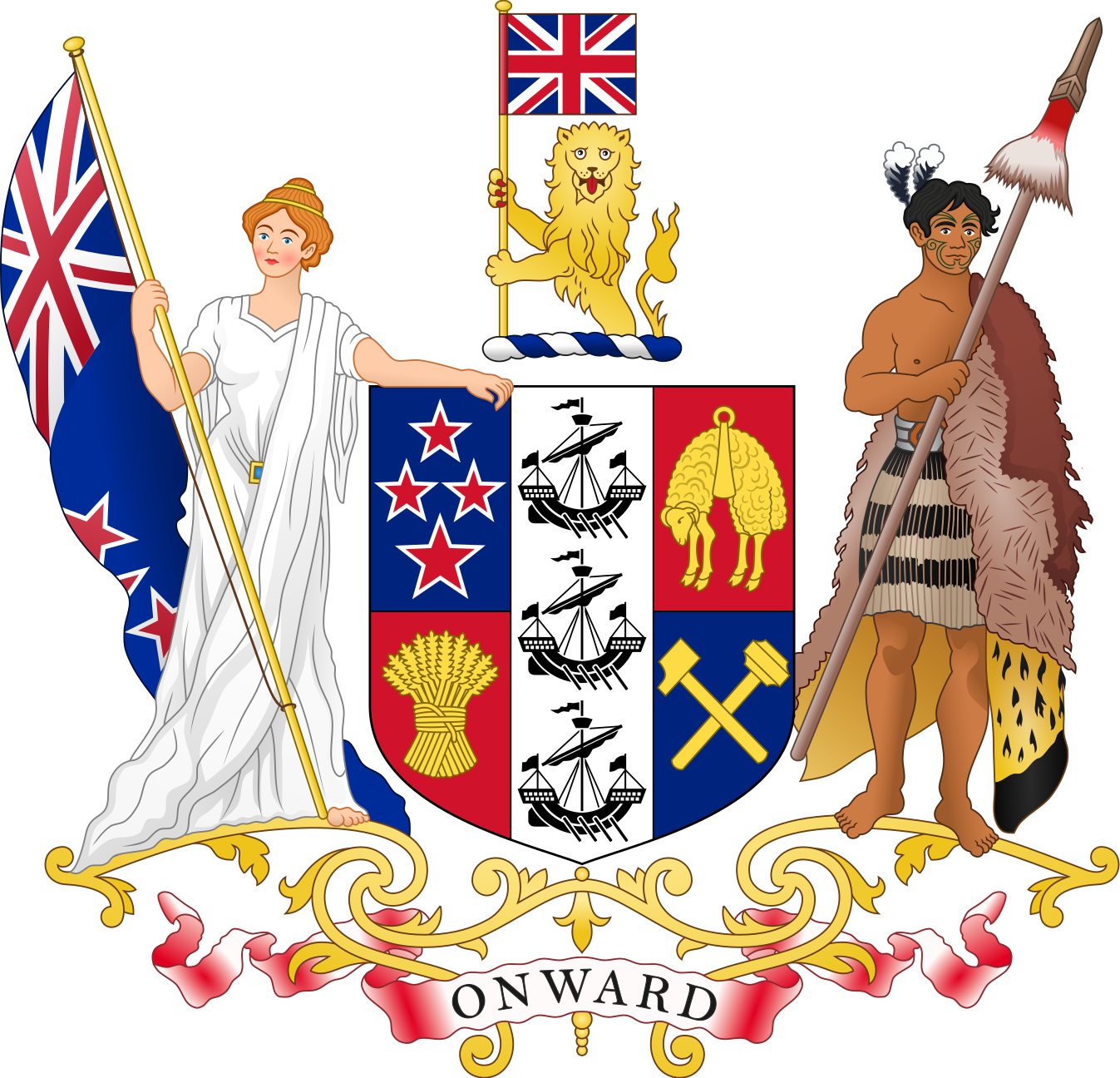
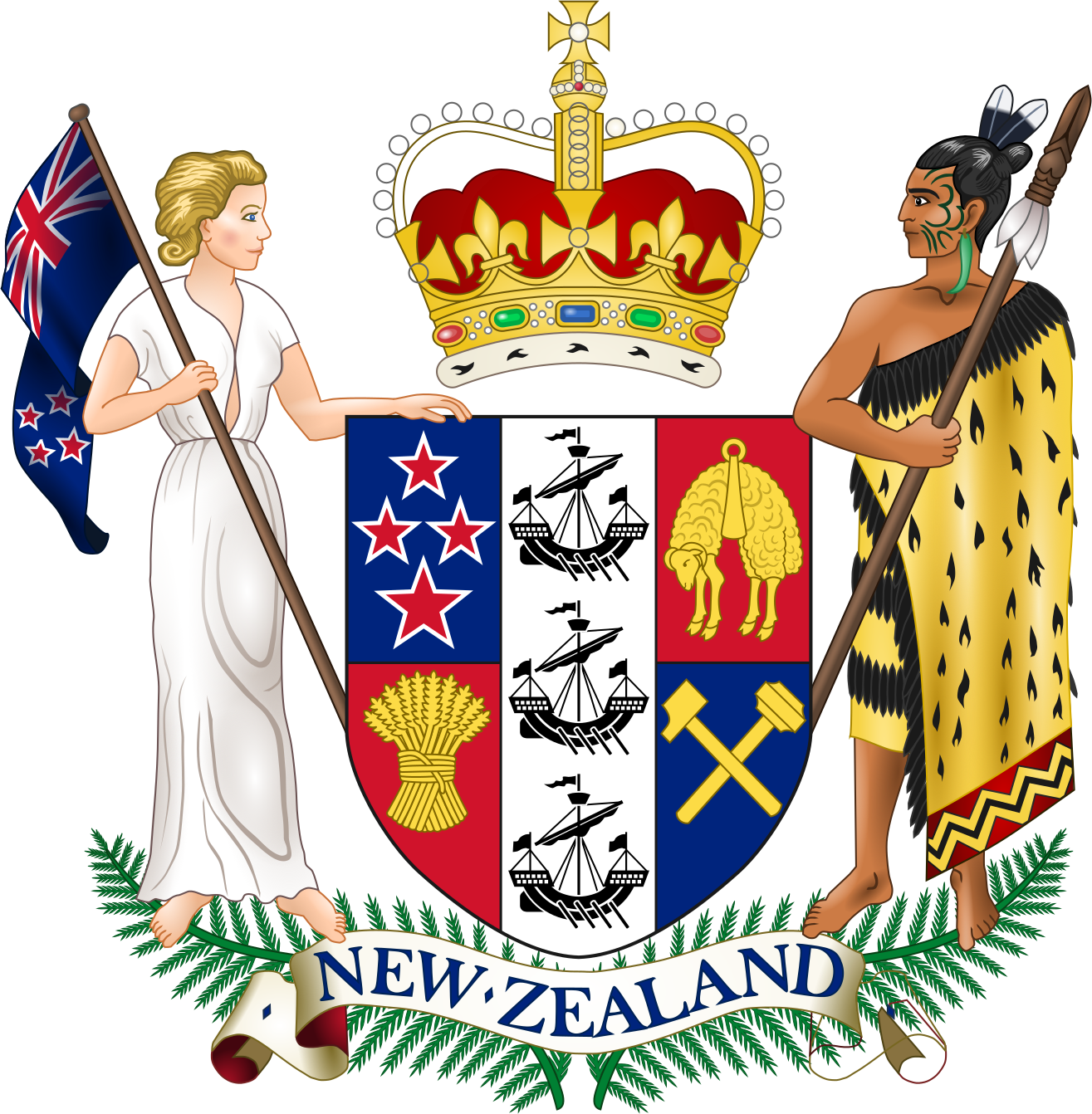
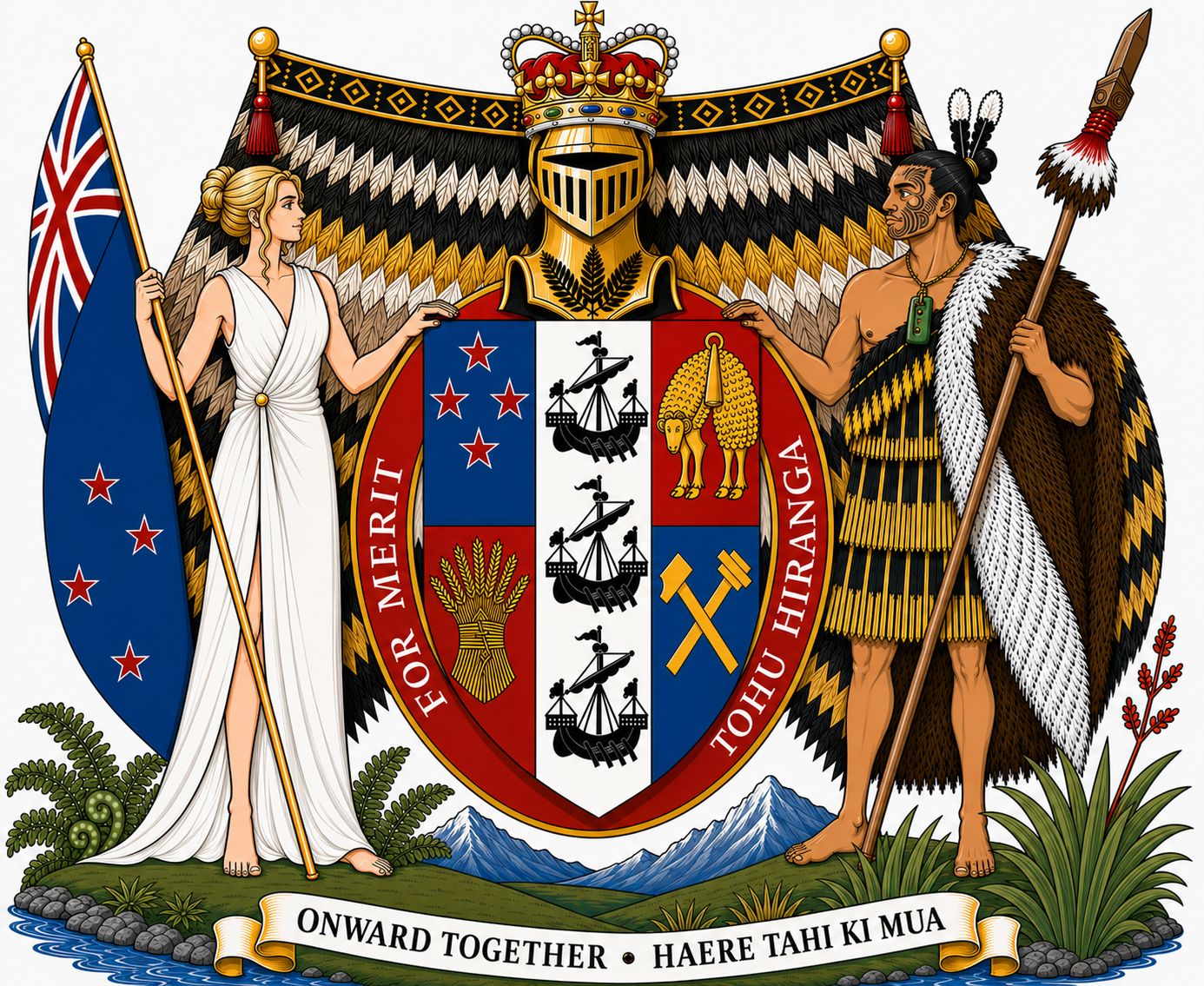
The present coat of arms was adopted in 1956, replacing an earlier version granted in 1911 during the reign of King George V. While the earlier arms reflected New Zealand’s status as a young nation within the Commonwealth, the modern version places greater emphasis on New Zealand’s own identity and independence.
At the centre of the design is a shield divided into several sections representing important aspects of New Zealand’s history and economy. Four red stars recall the Southern Cross constellation found on the national flag. A golden fleece represents pastoral farming, while a sheaf of wheat symbolises agriculture. Two crossed hammers refer to mining and industry. Three ships reflect New Zealand’s maritime history and the importance of overseas trade and migration.
Above the shield stands the Crown of Saint Edward, a traditional symbol of royal authority used throughout the Commonwealth. Here it demonstrates that New Zealand is a fully independent nation which chooses to share The King as its head of state.
On either side of the shield stand two supporters: a European woman carrying the national flag and a Māori rangatira holding a taiaha. Together they symbolise the partnership of peoples that shaped modern New Zealand.
The compartment beneath the shield is formed from silver fern fronds, one of the country’s most enduring national emblems. Although not officially declared a national symbol in law, the silver fern has long been associated with New Zealand identity both at home and overseas.
The New Zealand coat of arms continues to evolve but there is room for further expansion. For example, many national coats of arms have a helm above the shield. This element is missing, but if it were present, it could be crowned with the existing St Edward's Crown, as it is in the United Kingdom and Canada. Flowing down from the helm there is usually some form of mantling, a cloth that forms a backdrop for the arms. This could be shown in New Zealand's national colours (black and silver) or could be a stylized korowai cloak for an even more original appearance.
Many national shields are surrounded by a representation of the nation's top honour. There is no reason that the ribbon of the Order of New Zealand could not be placed around the shield. Perhaps the easiest element to consider “tweaking” is the current motto. The purpose of a coat of arms has always been to provide identification. It is a little redundant to provide a symbol of New Zealand and then write the name of the country under it. The motto “Onward” was used in the original coat of arms and could be adopted again. Alternatively, a Te Reo phrase could be considered.
These elements are not essential. The existing arms are perfectly acceptable. However, there is room to add more information, more detail, and more distinctive elements to them and it might be a shame to leave that opportunity unexplored.