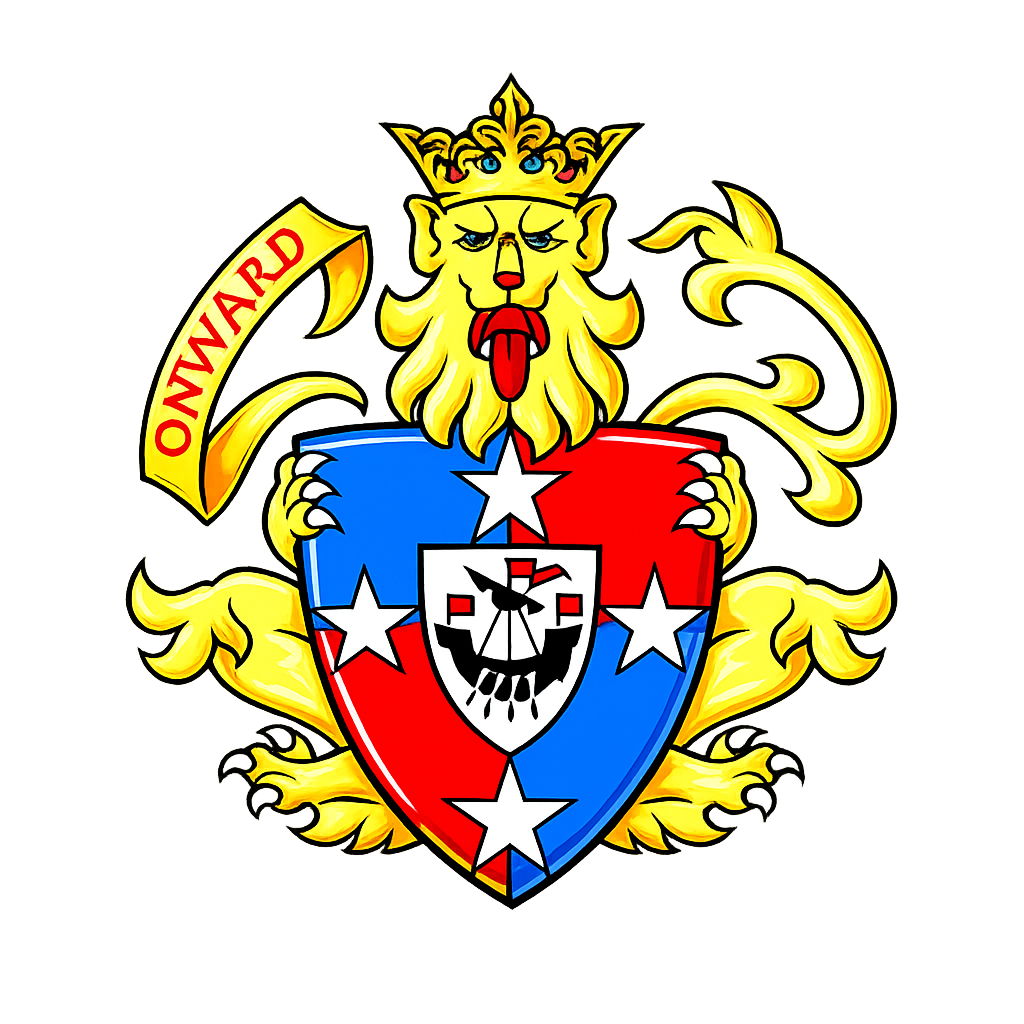
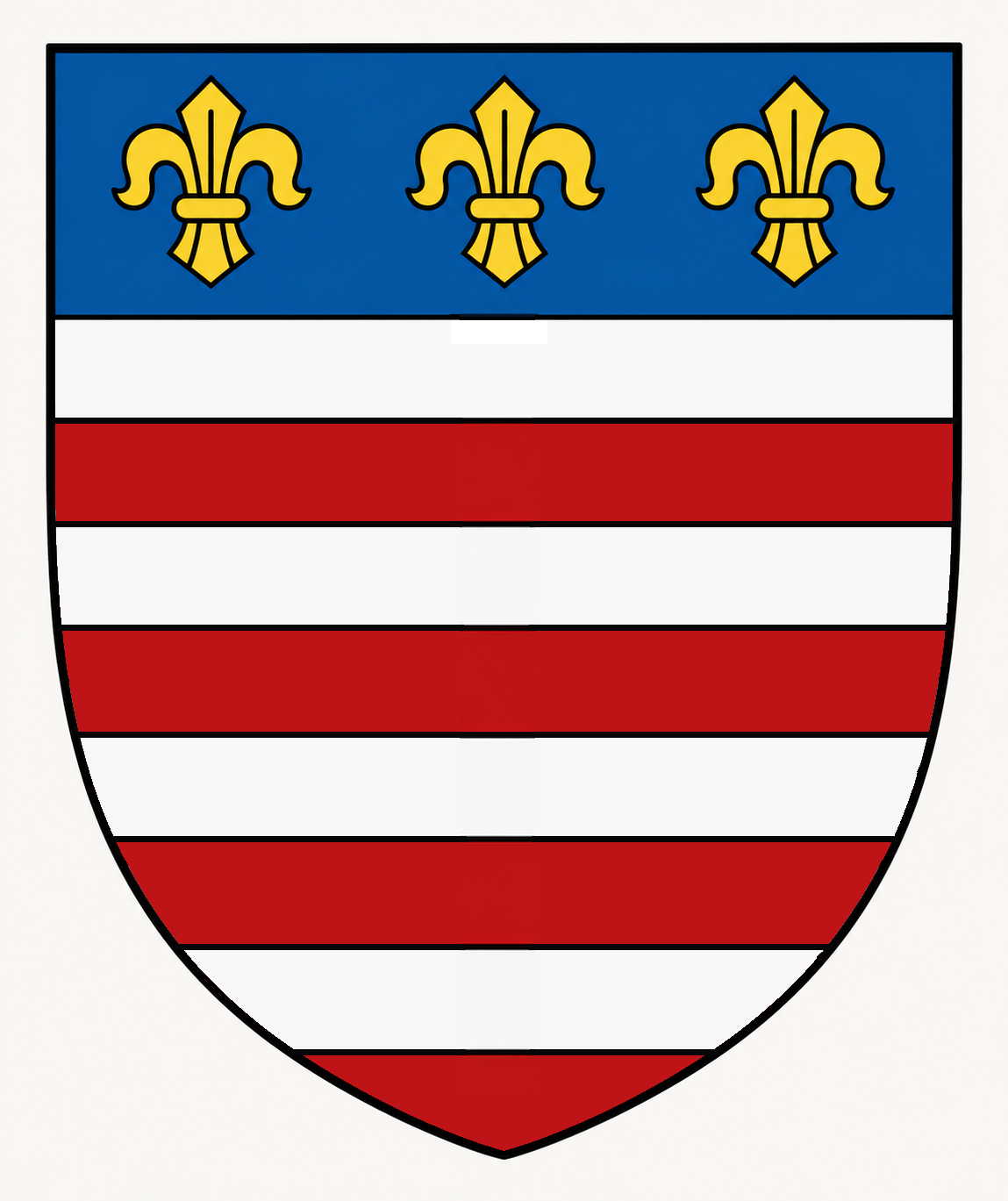
Civic Arms
New Zealand civic arms often combine inherited British heraldic forms with local references. The result is a varied tradition in which ships, rivers, native birds, agriculture, Māori motifs, and references to early settlement all appear alongside older heraldic symbols.
Auckland
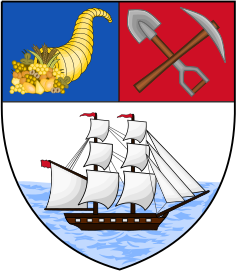
The arms of Auckland, granted in 1911, reflect the city’s close relationship with the sea. Ships and maritime imagery emphasise Auckland’s identity as a harbour city and major centre of trade and migration. The design also includes references to agriculture and industry, reflecting the city’s historical role as both a commercial and regional centre. The supporters are two kiwi birds, among the most recognisable symbols in New Zealand heraldry.
Wellington
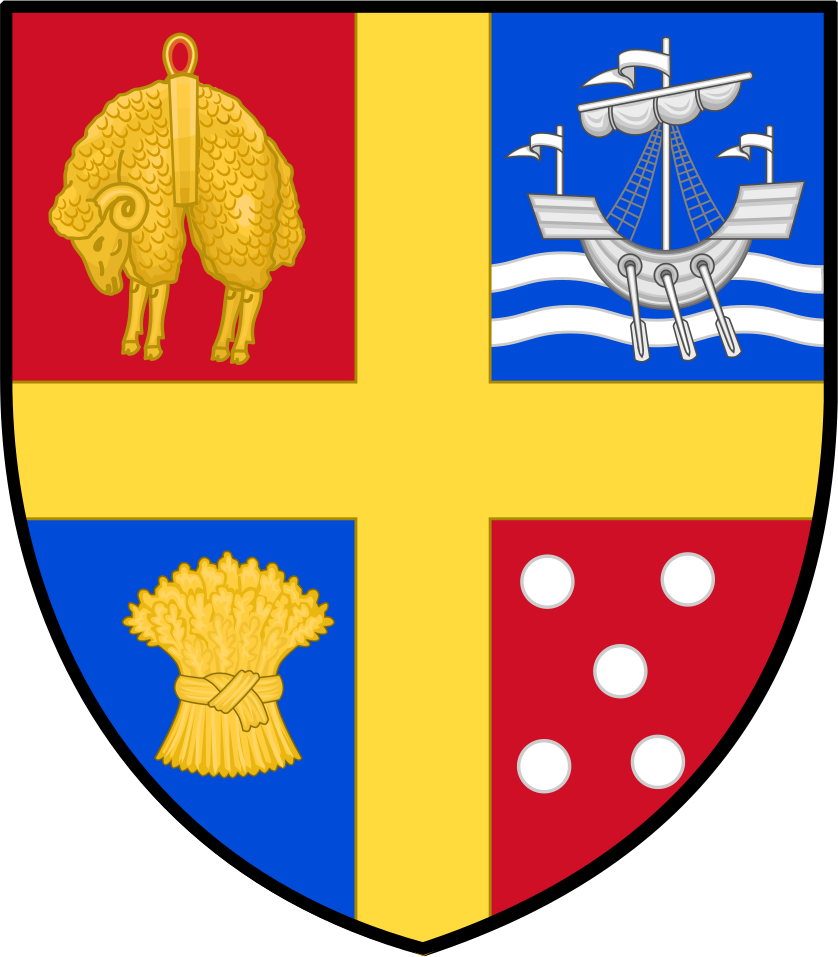
The arms of Wellington, granted in 1951, draw heavily on the heraldry of the Duke of Wellington, Arthur Wellesley, after whom the city was named. Alongside the symbols of New Zealand's industry, the five white circles on a red background are from the duke's coat of arms. The full achievement includes a moa supporter linking the arms directly to New Zealand’s natural history.
Christchurch
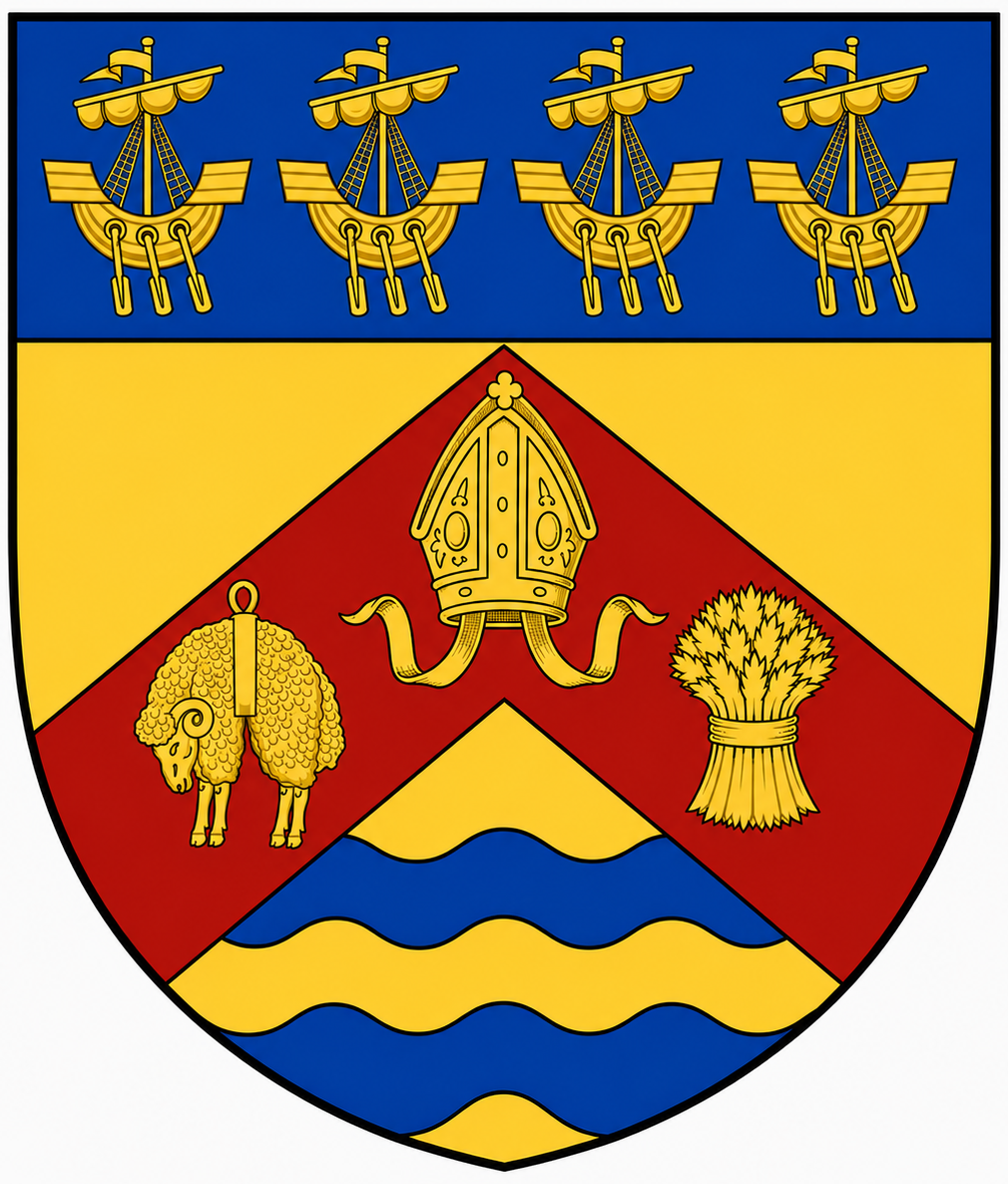
The 1949 arms of Christchurch are among the most traditionally English in appearance of any major New Zealand city. This reflects the Anglican settlement ideals associated with the city’s foundation. The shield includes references to the Church of England, the Canterbury settlement, and the “First Four Ships” that brought early settlers to the region, while native elements in the wider achievement, give the arms a distinctly New Zealand character.
Dunedin
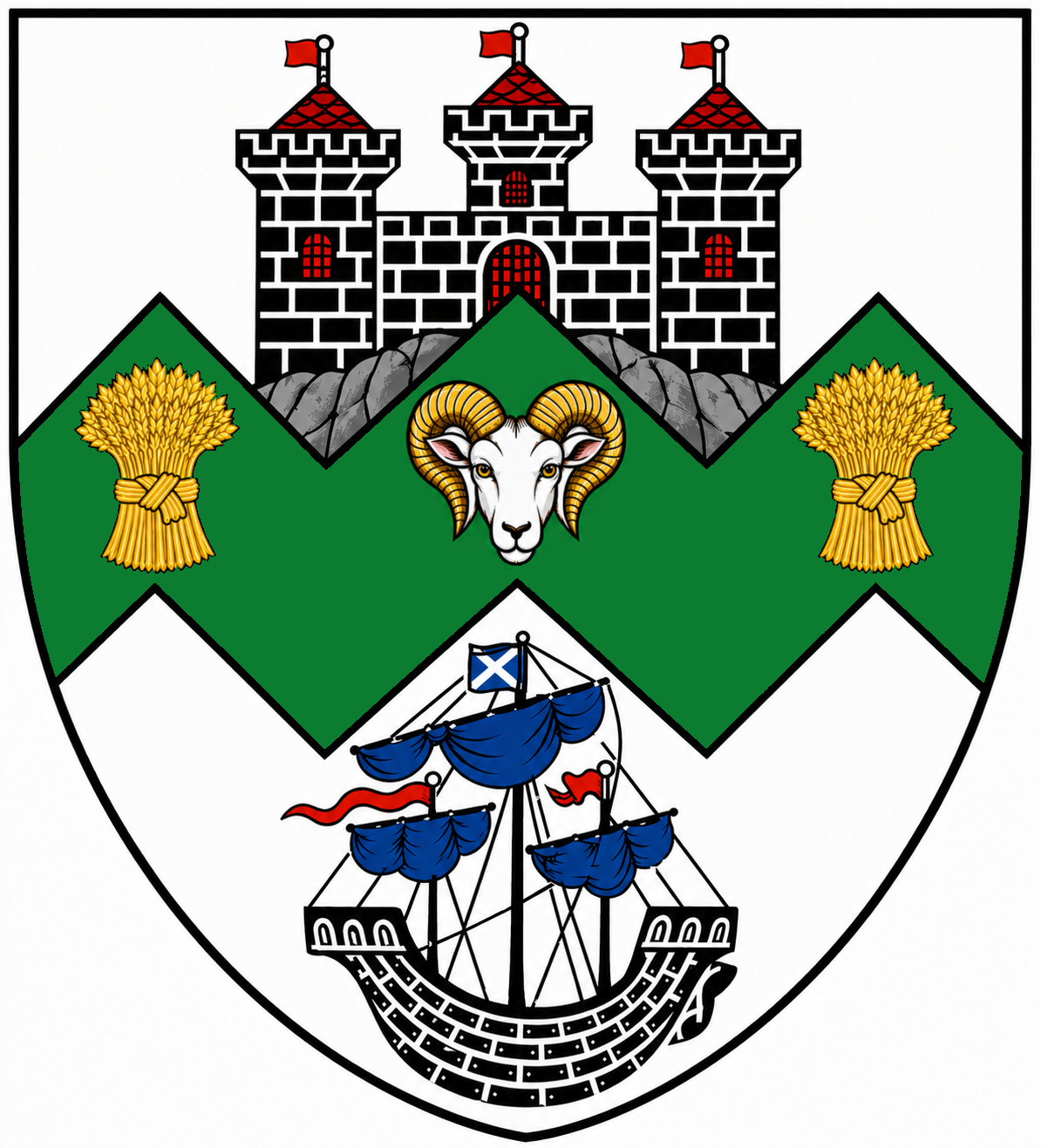
The arms of Dunedin, 1947, reflect the city’s Scottish origins. Dunedin itself takes its name from the Gaelic form of Edinburgh, and the heraldry strongly echoes Scottish civic tradition. Castles, crowns, and other elements derived from Scottish heraldry feature prominently, while the supporters symbolise the meeting of traditions that shaped the region’s history.
Hamilton
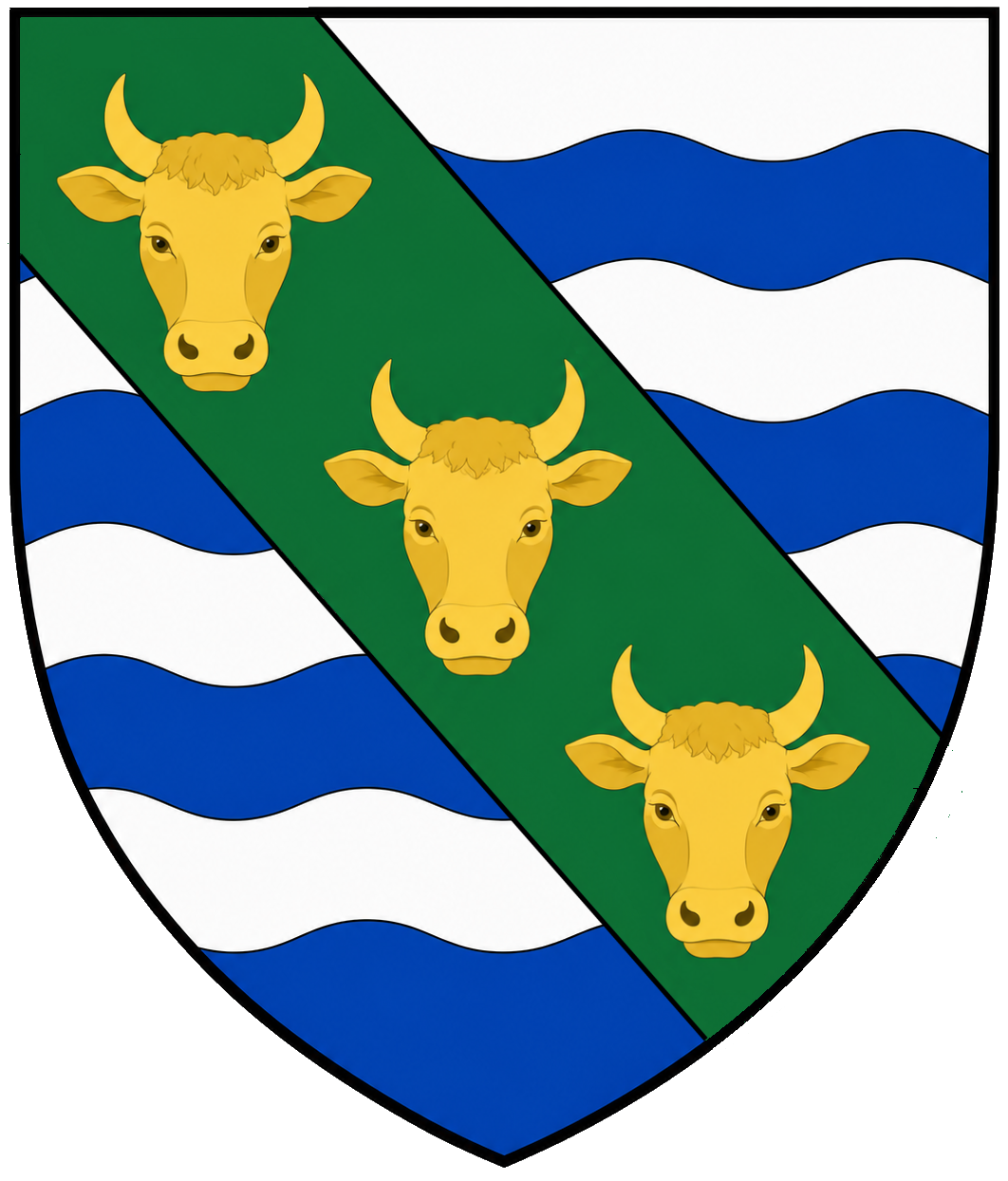
The arms of Hamilton, adopted in 1946, are comparatively modern in style and place strong emphasis on the Waikato River and the surrounding agricultural region. Rather than relying heavily on inherited European symbolism, the design focuses more directly on landscape and regional identity.
Nelson
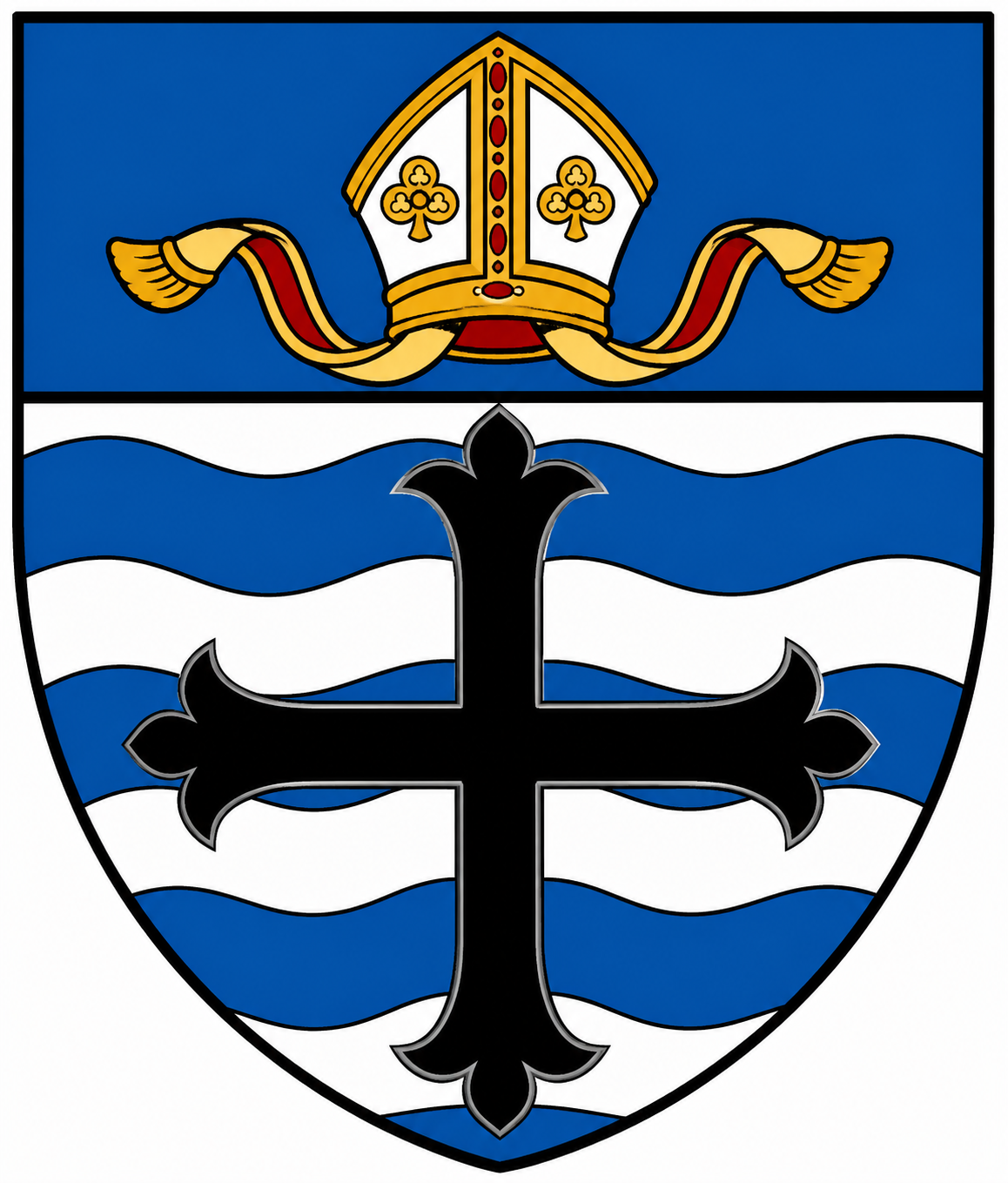
The arms of Nelson, 1958, contain references to the sea. It also draws inspiration from the coat of arms of Admiral Horatio Nelson, after whom the city was named, through the use of a large black cross. The bishop's mitre denotes Nelson's status as a “cathedral city”, a term once used to demonstrate the significance of the city based on it being the seat of a bishop.
Napier
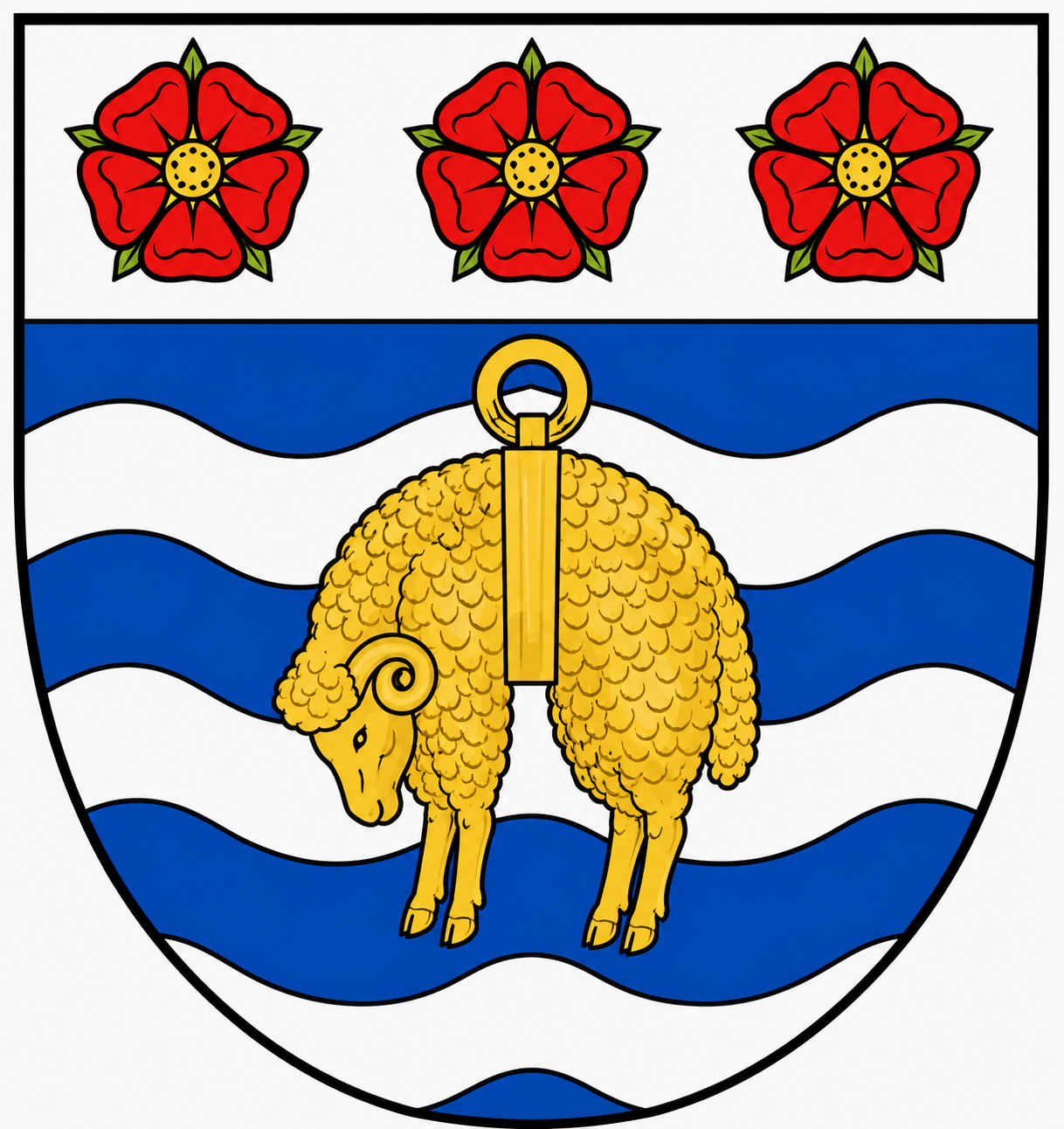
The 1951 arms of Napier combine traditional heraldic forms with references to Hawke’s Bay and the surrounding landscape. Agricultural symbolism reflects the importance of farming to the region. The three red roses are borrowed from the arms of Francis Napier, 6th Lord Napier (in Scotland). As with many arms in New Zealand, maritime imagery acknowledges the importance of coastal trade and settlement.
Invercargill
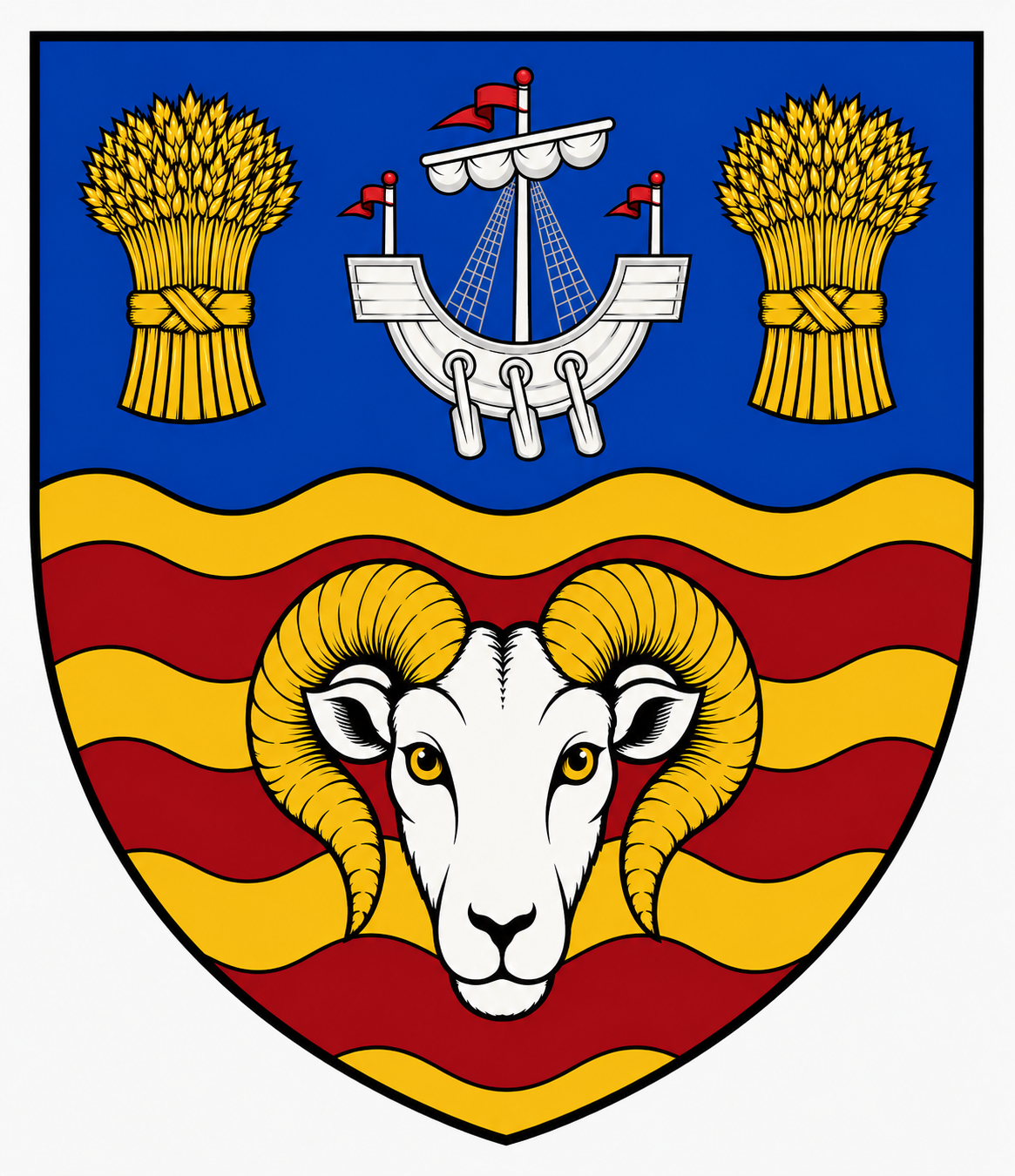
The arms of Invercargill, granted in 1958, contain strong references to Southland’s agricultural economy and Scottish heritage. Rams, sheaves, and rural imagery reinforce the region’s long association with farming and pastoralism. The red wavey lines are drawn from the arms of the Clan Drummond, which is associated with William Cargill, the city's namesake.
Palmerston North
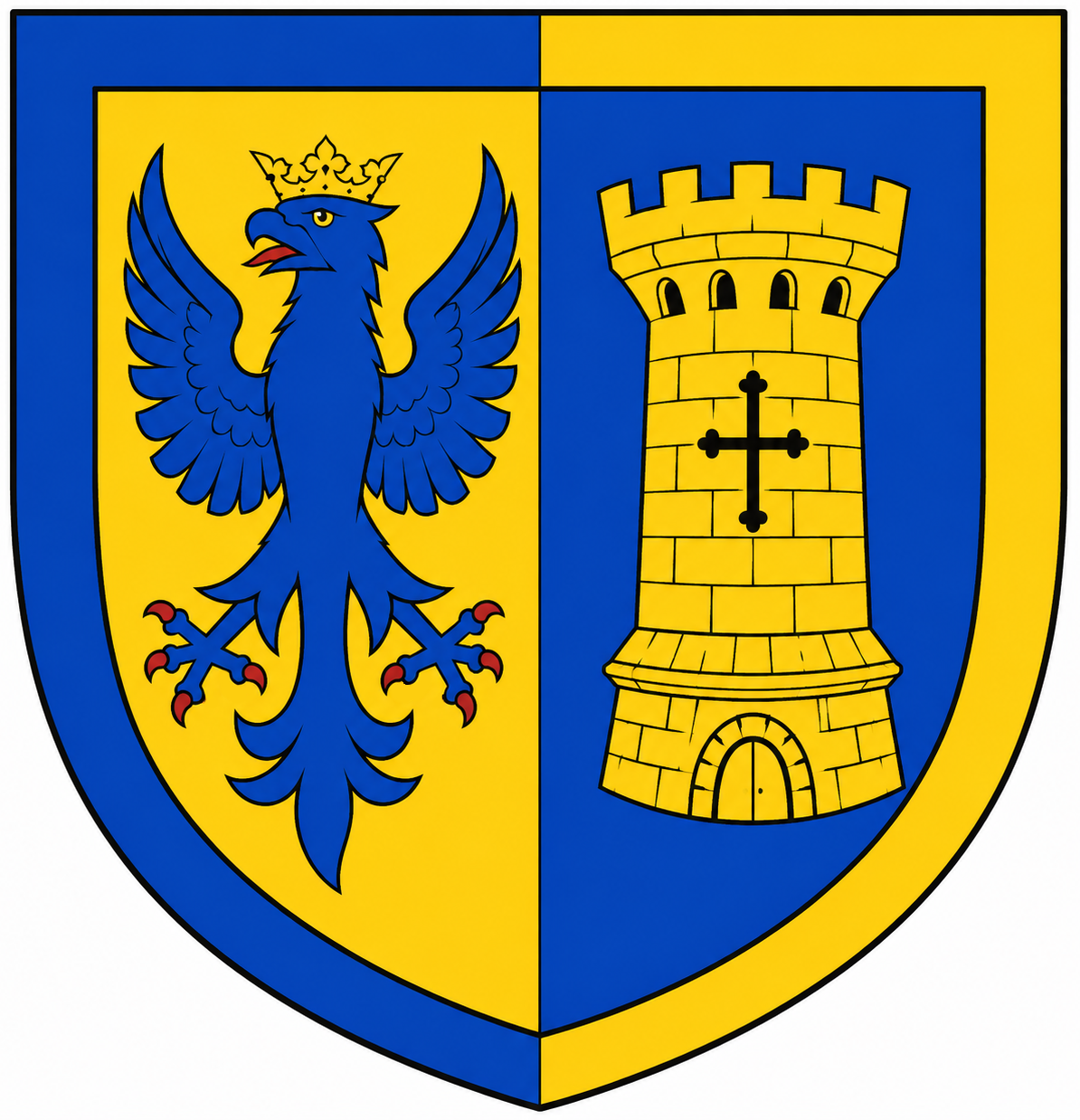
The arms of Palmerston North were granted in 1989, and replaced the unofficial arms used since 1885. The eagle on a yellow background is a reference to Henry John Temple, 3rd Viscount Palmerston. He served as Prime Minister of the United Kingdom for nine years. The other side of the shield is taken from the earlier, unofficial arms, but unfortunately, it is not known what it symbolises.
Rotorua
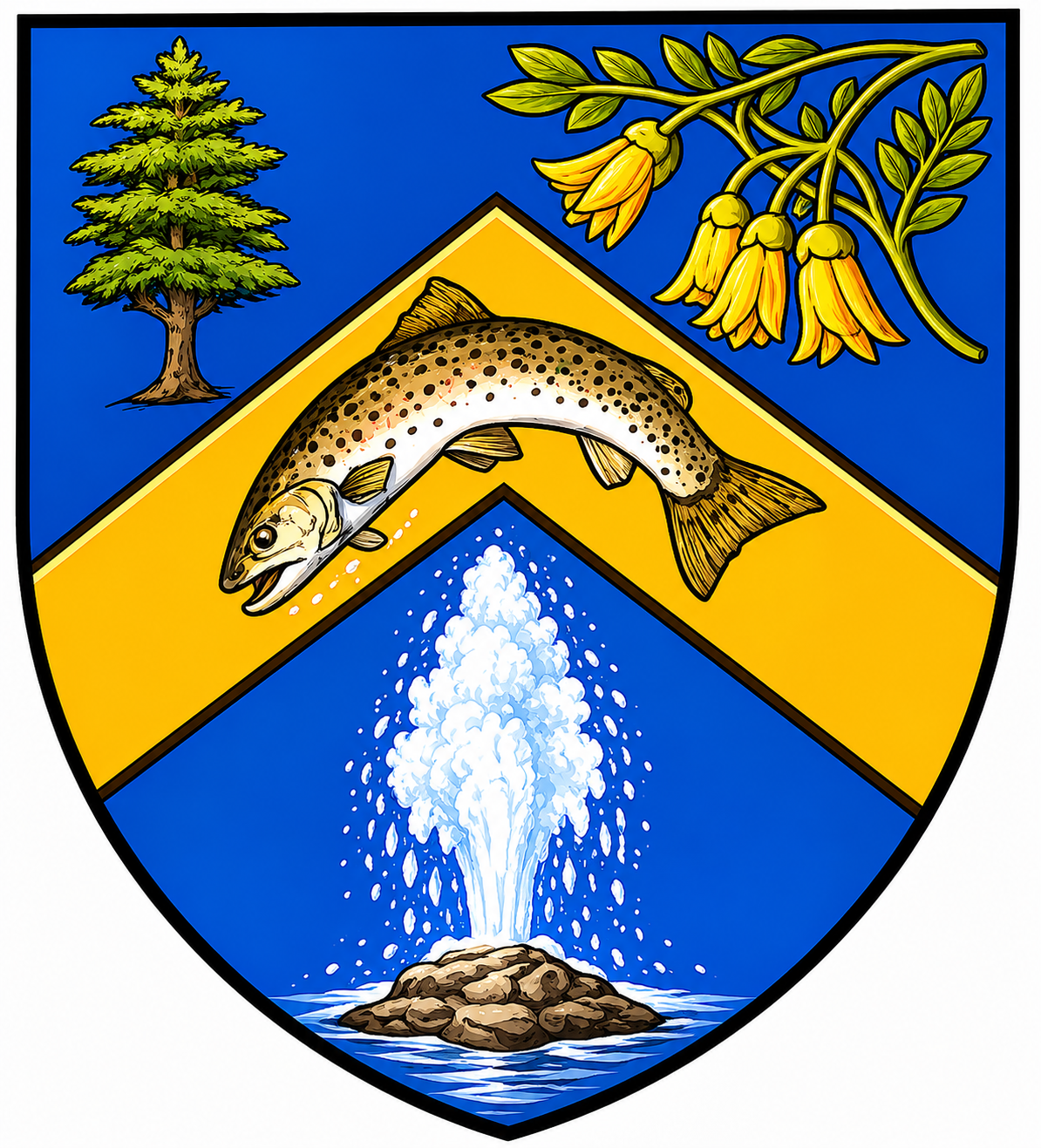
The arms of Rotorua, 1963, do not use the traditional symbols of industry and enterprise found in many other cities coats of arms. Instead, they make specific reference to forestry, fishing, and geothermal activity. In 1963, Rotorua was believed to be the only New Zealand city with a motto in Maori rather than Latin on its coat of arms. "Tatou tatou" means "We together" or "We are one".
Whangārei
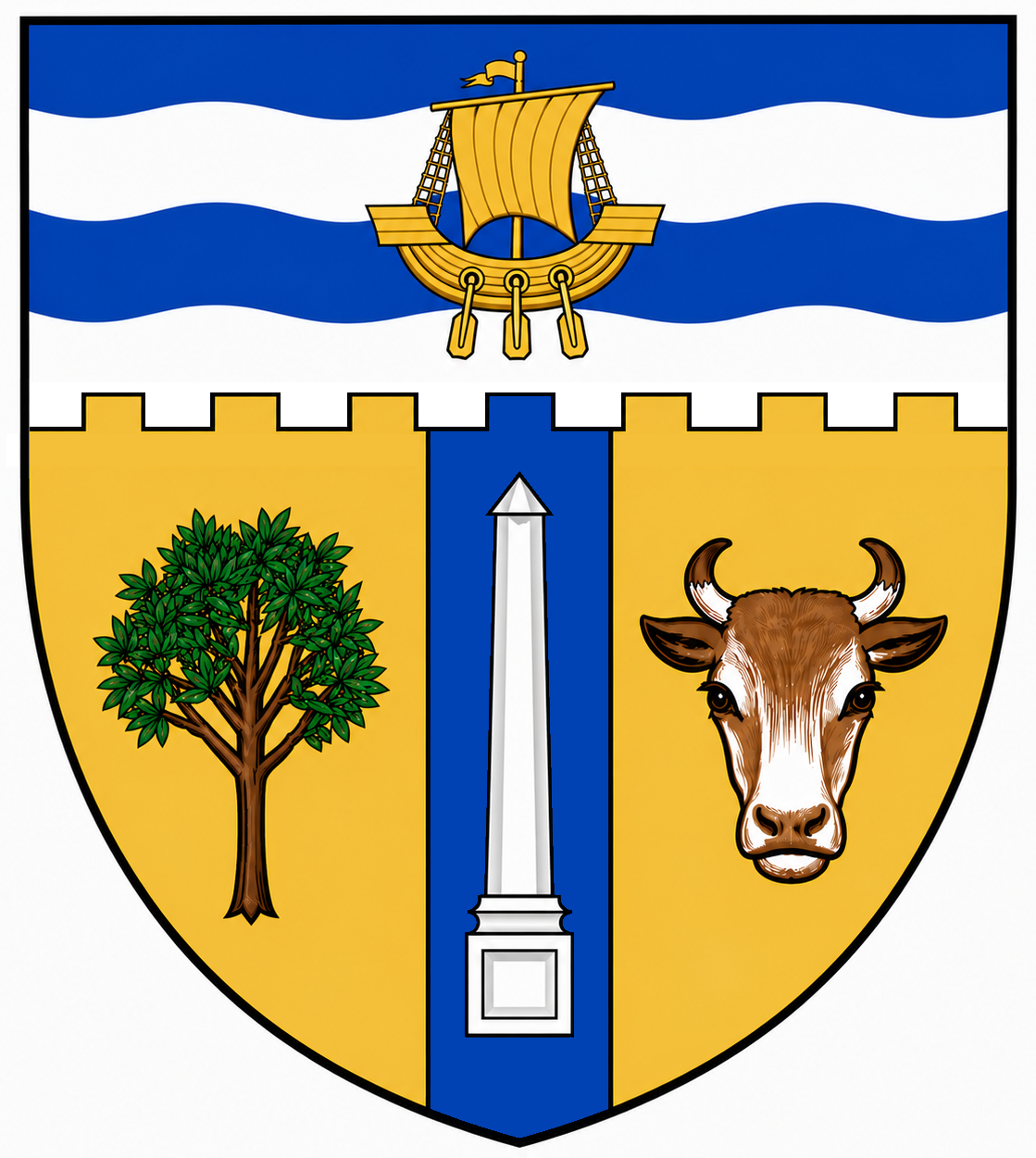
The arms of Whangārei are especially rooted in the landscape and resources of Northland. The kauri tree refers to the great northern forests and the timber industry, while the cow’s head points to the surrounding farming country. The obelisk represents the Mt Parihaka memorial, a very specific local landmark, and the golden lymphad on the wavy chief links the district to harbour, coastal, and maritime history.
Lower Hutt
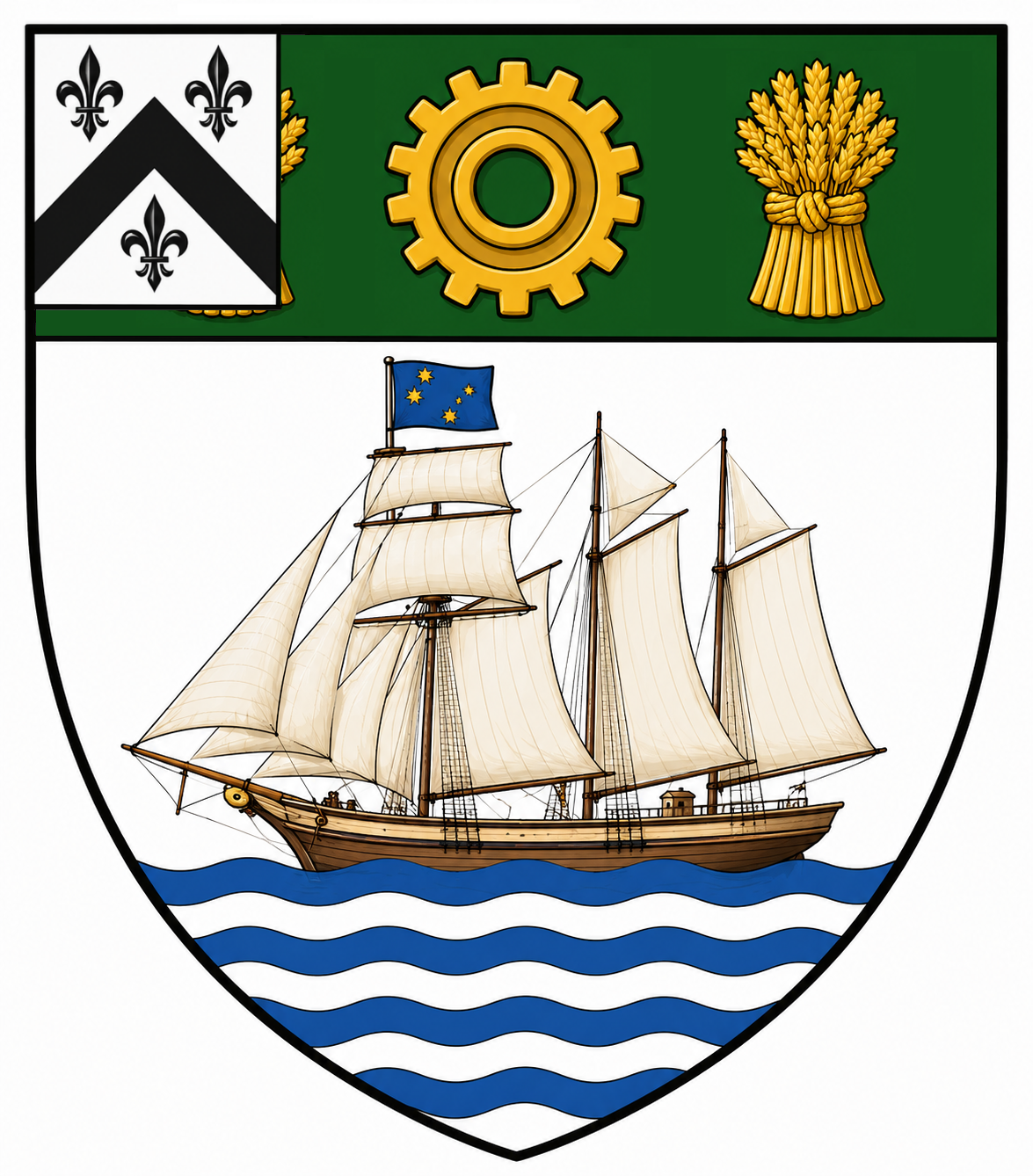
The arms of Lower Hutt, granted in 1955, refer directly to the settlement, industry, agriculture, and history of the city. The barquentine in full sail recalls the arrival of early European settlers in the Hutt Valley, while the green chief carries a cog wheel for industry between two golden garbs for agriculture. The canton, with a black chevron and three black fleurs-de-lis, comes from the arms of Sir William Hutt, a Member of Parliament in the U.K. and a Director of the New Zealand Company, from whom the City takes its name.
Gisborne
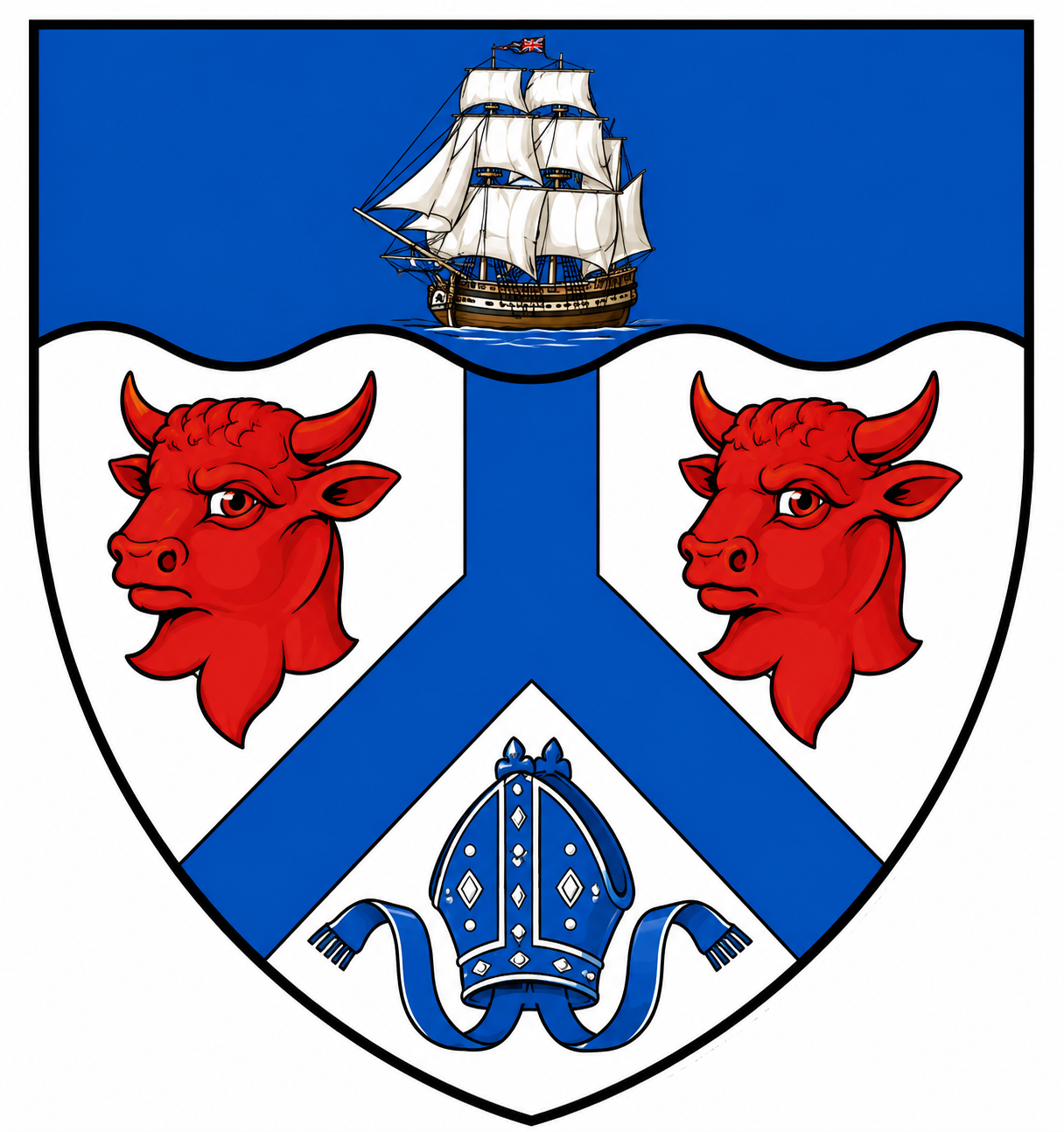
The arms of Gisborne include one of the most distinctive references in New Zealand civic heraldry: HM Bark Endeavour, shown in full sail on the wavy blue chief. This directly recalls Captain Cook’s arrival on the East Coast. The red bulls’ heads refer to pastoral farming, while the mitre in base marks the city’s ecclesiastical importance as the seat of a bishop.
Whanganui
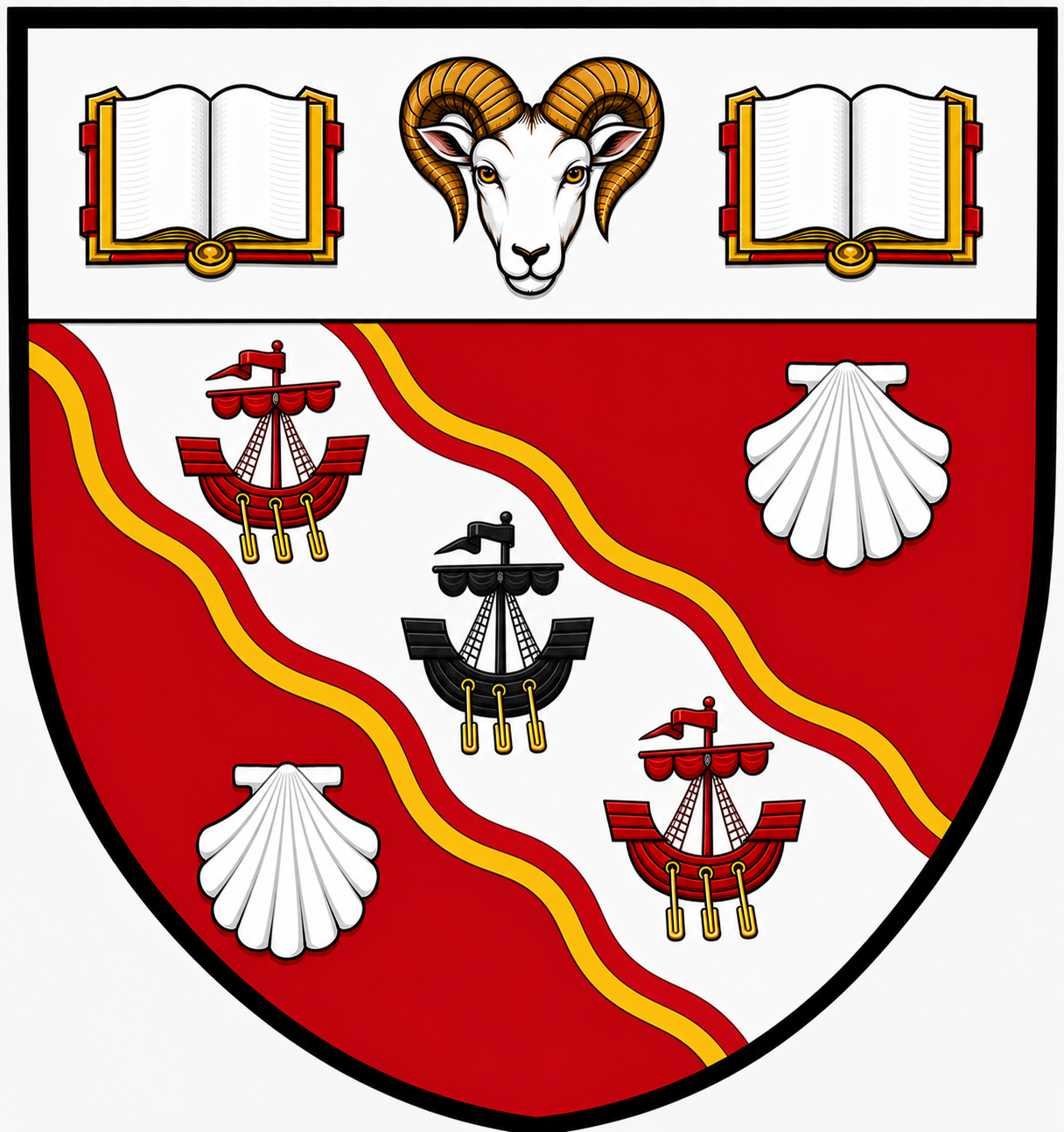
The arms of Whanganui, granted in 1955, place strong emphasis on the Whanganui River, represented by the wavy silver band, which has long shaped the region’s economy, transport, and identity. The silver shells, denoting a pilgrimage, were taken from the coat of arms of Lord Petre, an important officer of the New Zealand Company, after whom the city was first named. The three ships come from the coat of arms of William Hogg Watt, the first Mayor, and represents the fleet of ships of Taylor and Watt, which opened up trade from Wanganui to the outside world.